Working Hour:

09:00am to 06:00pm

  1. Home
  2. Country
  3. MBBS IN NEPAL

MBBS in Nepal

Nepal has become a top destination for Indian students aspiring to pursue MBBS due to its cost-effective education system, quality medical training, and globally recognized degree programs. With a curriculum closely aligned with India’s medical education, Nepal provides Indian students with a smooth transition, eliminating language barriers and cultural adjustments. The availability of MCI/NMC-approved medical colleges ensures that students can practice medicine in India after completing their MBBS and passing the FMGE/NEXT exam. Moreover, the total cost of MBBS in Nepal is significantly lower compared to private medical colleges in India, making it an affordable option for middle-class families.

One of the most attractive aspects of studying MBBS in Nepal is the simplified admission process. Students do not need to appear for entrance exams like IELTS or TOEFL, and direct admission is possible for eligible candidates. Nepal’s close proximity to India also ensures easy travel and connectivity, allowing students to visit home frequently. The medical colleges in Nepal provide a well-structured academic environment with experienced faculty, advanced medical infrastructure, and extensive clinical exposure through internships at reputed hospitals. Additionally, the presence of a large Indian student community in Nepal fosters a comfortable learning atmosphere, making MBBS in Nepal a highly sought-after choice.

Geography of Nepal

Nepal is a landlocked country located in South Asia, bordered by China to the north and India to the south, east, and west. It is home to the Himalayan mountain range, including Mount Everest, the world’s highest peak. The country’s diverse topography consists of plains, hills, and mountains, with elevations ranging from 60 meters to over 8,848 meters above sea level.

Famous Cities in Nepal

Nepal is home to several historically and culturally significant cities that attract tourists, students, and business professionals from around the world. Each city offers a unique blend of heritage, modern infrastructure, and vibrant local traditions. From the bustling capital city of Kathmandu to the serene beauty of Pokhara, Nepal’s urban centres provide diverse experiences. The cities are also known for their prominent educational institutions, thriving marketplaces, and deep-rooted cultural festivals. Below is a list of some of the most famous cities in Nepal, along with key highlights of each.
CityPopulationKey Points
Kathmandu1.4 millionThe capital city, cultural hub with historic temples, and palaces
Pokhara500,000Known for its lakes, adventure sports, and scenic beauty
Lalitpur (Patan)300,000Famous for its ancient temples and art culture
Bhaktapur90,000UNESCO World Heritage city, rich in medieval architecture
Biratnagar250,000Major industrial and trade center of Nepal
Chitwan200,000Famous for Chitwan National Park, a wildlife sanctuary
Nepalgunj140,000Commercial hub near the Indian border

Famous Festivals of Nepal

Nepal is a land of diverse cultures and traditions, where festivals play a significant role in the lives of its people. The country celebrates a wide range of festivals throughout the year, reflecting its rich religious heritage and ethnic diversity. Most festivals are deeply rooted in Hindu and Buddhist traditions, while others showcase Nepal’s multicultural influences. These celebrations often include grand feasts, vibrant processions, traditional music, and ritual performances, bringing people together in harmony.

  • Tihar (Deepawali): Festival of lights, similar to Diwali in India.
  • Holi: Festival of colors celebrated with great enthusiasm.
  • Buddha Jayanti: Celebration of Lord Buddha’s birth.
  • Indra Jatra: This is a Traditional festival celebrated in Kathmandu.
  • Dashain: The biggest Hindu festival, celebrated with family gatherings and rituals.

These festivals not only provide an opportunity for spiritual reflection but also serve as occasions for family reunions and cultural preservation. Whether religious or seasonal, each festival in Nepal offers a glimpse into the country’s deep-rooted traditions, making it a vibrant and colourful destination for visitors worldwide.

Famous Foods of Nepal

Nepalese cuisine is a unique blend of Flavors influenced by Tibetan, Indian, and Chinese culinary traditions. The food in Nepal varies across regions, offering a mix of hearty dishes, spicy delicacies, and comforting meals. With an emphasis on locally sourced ingredients, Nepalese food is known for its rich taste and cultural significance. Traditional meals are often prepared with a combination of lentils, rice, vegetables, and aromatic spices, providing a wholesome and balanced diet.

  • Dal Bhat: Lentil soup served with rice, a staple Nepali food.
  • Momo: Steamed dumplings filled with vegetables or meat.
  • Thukpa: A Tibetan-style noodle soup.
  • Sel Roti: This is Traditional rice-based fried bread.
  • Gundruk: Fermented leafy greens, a traditional Nepali dish.

The diverse food culture of Nepal offers something for everyone, from street food lovers to those seeking traditional home-cooked meals. Whether enjoying a hot bowl of Thukpa in the mountains or savoring freshly made momos in the cities, Nepalese cuisine is a delightful journey of flavors and textures that reflect the country’s rich heritage.

Famous Vegetarian Foods in Nepal

Nepal offers a variety of delicious vegetarian dishes that are deeply rooted in its culture and traditions. With a large portion of the population following vegetarian diets due to religious beliefs and lifestyle choices, Nepali cuisine features a wide range of plant-based meals that are both nutritious and flavorful. Many of these dishes incorporate lentils, rice, fresh vegetables, and aromatic spices, creating a balanced and wholesome diet.

  • Dal Bhat (Vegetarian version): Rice with lentil soup and vegetables.
  • Vegetable Momo: Steamed dumplings filled with fresh veggies.
  • Aloo Tama: Curry made of bamboo shoots, potatoes, and black-eyed peas.
  • Chatamari: Nepali-style rice crepe, often vegetarian.
  • Yomari: Sweet steamed dumpling made of rice flour and molasses.

Whether you are a strict vegetarian or simply enjoy plant-based meals, Nepal offers a diverse selection of vegetarian-friendly dishes that cater to all palates. From street food stalls to fine dining restaurants, vegetarian Nepali cuisine is widely available and showcases the country’s culinary excellence.

Pursue Your Medical Dreams Overseas

Explore top medical universities with our comprehensive guidance.

Famous Transport Facilities in Nepal

Nepal’s transport system is an essential part of daily life, connecting remote villages to bustling urban centers. Due to the country’s diverse topography, transportation options range from roadways and airways to traditional means like ropeways in mountainous regions. While the capital city, Kathmandu, has a relatively well-developed road network, rural areas often rely on alternative modes of transportation to navigate the hilly terrain.

  • Public Buses: Cheapest and most common mode of transport.
  • Micro Vans: Small public vans that run on fixed routes.
  • Taxis: Readily available in major cities, metered or fixed fare.
  • Rickshaws: These are Common in old town areas for short-distance travel.
  • Domestic Flights: Essential for travel to remote mountainous areas.

Despite infrastructural challenges, Nepal’s transport facilities continue to evolve with advancements in road connectivity and digital booking services. As tourism and urbanization grow, the government is investing in better infrastructure to improve accessibility across the country. Whether traveling within cities or exploring the majestic Himalayan regions, Nepal offers a unique transportation experience tailored to its rugged landscapes.

International Airports in Nepal

Nepal serves as a major hub for international travelers, connecting the country with key destinations around the world. Due to its strategic location between India and China, Nepal plays a significant role in regional air travel. The country’s international airports facilitate tourism, trade, and business, offering direct flights to various Asian and Middle Eastern cities. With the recent expansion and modernization of airport facilities, Nepal aims to enhance passenger experience and accommodate increasing air traffic.
Airport NameLocationNotes
Tribhuvan International AirportKathmanduOnly international airport currently operating in Nepal
Gautam Buddha International AirportLumbiniNewly opened, serving international flights
Pokhara International AirportPokharaExpected to boost tourism and connectivity

Pursue Your Medical Dreams Overseas

Explore top medical universities with our comprehensive guidance.

Weather Conditions in Nepal (Month-wise)

Nepal experiences a diverse range of weather conditions due to its varied topography, from the lowland Terai region to the towering Himalayan peaks. The country enjoys four distinct seasons: winter, spring, monsoon, and autumn, each offering unique climatic conditions. Travelers and students planning to stay in Nepal should be aware of seasonal variations to prepare accordingly.
MonthTemperature Range (°C)Season
January2 – 15Winter
February5 – 18Winter
March10 – 24Spring
April15 – 28Spring
May18 – 32Pre-monsoon
June20 – 34Monsoon
July22 – 30Monsoon
August21 – 30Monsoon
September18 – 28Post-monsoon
October14 – 26Autumn
November8 – 22Autumn
December3 – 18Winter
Understanding Nepal’s weather conditions is essential for travellers, students, and professionals planning long-term stays. While the monsoon season brings heavy rains that can impact travel, the autumn and spring months offer the most pleasant weather, making them ideal for outdoor activities and tourism. Whether visiting Nepal for education, business, or exploration, being prepared for seasonal changes will ensure a comfortable experience.

Famous Online Applications & Websites in Nepal

In the digital age, Nepal has witnessed significant growth in online services, making daily activities more convenient for its residents and visitors. From booking transportation to ordering food and making financial transactions, various online applications and websites cater to different needs. These platforms have made life easier for travelers, students, and professionals by offering user-friendly interfaces and seamless services.
ServiceWebsite/App Name
Flight BookingYeti Airlines, Buddha Air
Bus Ticket BookingSajha Yatayat, BusSewa
Train Ticket BookingNo railway service available in Nepal
Taxi BookingPathao, Tootle
Food DeliveryFoodmandu, Bhoj Deals
Online ShoppingDaraz, HamroBazar
Mobile PaymenteSewa, Khalti
The rise of digital platforms in Nepal has revolutionized how people access essential services, bringing convenience and efficiency to everyday life. Whether booking a ride, shopping online, or making cashless transactions, these platforms continue to improve accessibility and enhance user experience in the country’s growing digital landscape.

Additional Information about Nepal

Nepal is a country of immense natural beauty, rich history, and cultural significance. It is home to Mount Everest (Sagarmatha), the world’s highest peak, which attracts thousands of mountaineers, trekkers, and adventure enthusiasts every year. The Everest Base Camp trek is one of the most popular trekking routes, offering breathtaking views and a chance to experience the unique Sherpa culture.

Another globally significant site is Lumbini, the birthplace of Lord Buddha, which is recognized as a UNESCO World Heritage Site. As one of the holiest places for Buddhists, Lumbini attracts pilgrims and tourists from around the world. The site is home to numerous monasteries built by various countries, reflecting the global influence of Buddhism. Nepal also boasts incredible biodiversity, with national parks such as Chitwan National Park and Sagarmatha National Park providing sanctuary to rare wildlife species like the Bengal tiger, one-horned rhinoceros, and snow leopard. These parks are popular for wildlife safaris and conservation tourism.

An interesting aspect of Nepal is its unique calendar system, the Bikram Sambat, which is different from the Gregorian calendar. The Nepalese New Year usually falls in mid-April, and the country follows this calendar for official purposes. Nepal is also a hub for adventure tourism, offering activities like paragliding in Pokhara, white-water rafting in the Trishuli River, and bungee jumping in Bhote Koshi. Trekking remains the most sought-after activity, with trails like Annapurna Circuit, Langtang Valley, and Manaslu Circuit attracting adventurers worldwide. With its mix of spiritual heritage, natural wonders, and thrilling adventure activities, Nepal remains a top destination for travelers, students, and culture enthusiasts. Whether one seeks spiritual enlightenment, adventure, or cultural exploration, Nepal offers an unforgettable experience.

Embark on Your Medical Career Abroad

Apply to world-class institutions with our End-to-End Support.

Why Study MBBS in Nepal?

Nepal has become a top destination for medical aspirants due to its affordable yet high-quality MBBS programs. The country’s medical education system is well-structured, providing students with internationally recognized degrees and extensive clinical exposure. Below are key reasons why studying MBBS in Nepal is a great choice:

Affordable Fees & Low Living Costs: Nepal offers one of the most cost-effective MBBS programs compared to private medical colleges in India. Additionally, living expenses in Nepal are much lower, making it a budget-friendly option for students.

MCI/Approved Medical Colleges: Medical universities in Nepal are recognized by India’s National Medical Commission (NMC), enabling graduates to practice in India after passing the FMGE/NEXT exam.

No Language Barrier – English Medium of Instruction: MBBS courses in Nepal are taught in English, making it easy for Indian students to adapt to the academic environment without any language issues.

Internship Opportunities in Recognized Hospitals: Students gain hands-on experience in reputed hospitals, providing them with the necessary clinical skills before they enter the medical profession.

Safe and Friendly Environment for Indian Students: Nepal shares cultural similarities with India, making it a welcoming and comfortable place for Indian students to study and live.

Close to India – Easy Connectivity & Similar Culture: Nepal’s geographical proximity to India allows students to travel easily, reducing the hassle of long-distance relocations.

Globally Recognized Degree – MBBS degrees from Nepal are recognized by major international medical councils, allowing students to pursue higher studies or practice in various countries worldwide.

High Quality of Education with Experienced Faculty: The medical colleges in Nepal follow a curriculum similar to that of India and are staffed with experienced professors and medical professionals.

No Donation or Capitation Fees Required: Unlike private medical colleges in India, Nepalese medical universities do not demand hefty capitation fees, making the admission process more transparent and affordable.

Simplified Admission Process with Direct Entry Options: The admission process in Nepal is straightforward, with no entrance exams required other than NEET for Indian students.

Opportunity to Prepare for USMLE, PLAB, and Other Exams: Many medical colleges in Nepal provide additional guidance for students preparing for licensing exams such as USMLE (USA), PLAB (UK), and AMC (Australia).

Studying MBBS in Nepal provides a unique combination of affordability, quality education, and international career opportunities, making it an excellent choice for medical aspirants.

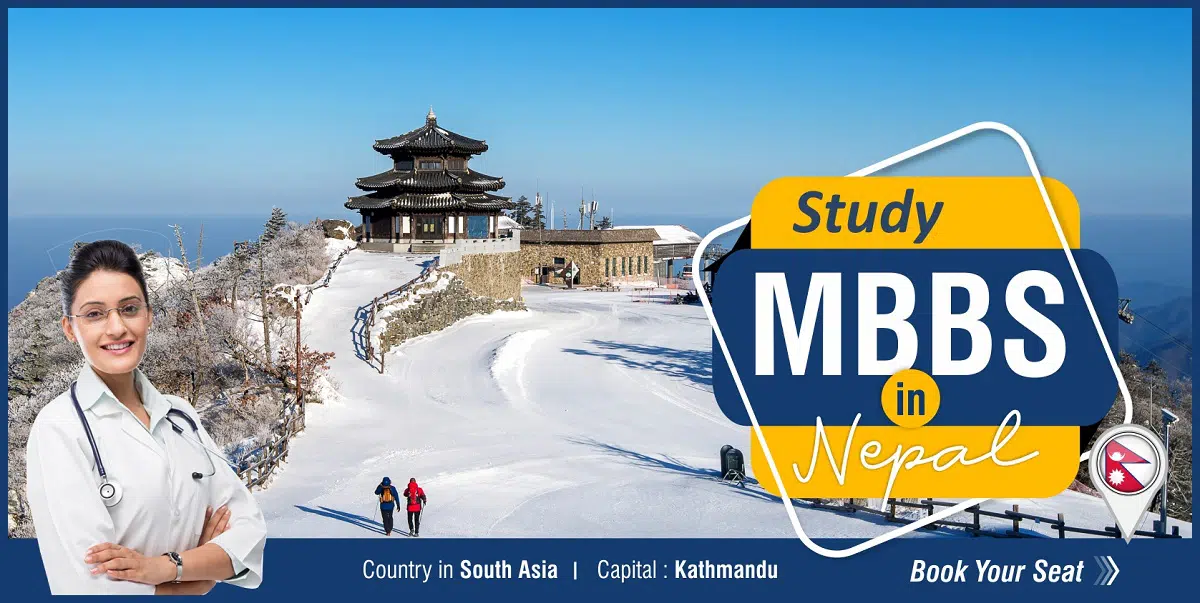
MBBS in Nepal – Fee Structure & Duration

Pursuing MBBS in Nepal has become an attractive option for students, particularly from India and neighbouring countries. Nepal’s medical universities offer a balance of affordability, high academic standards, and excellent clinical exposure. The table below provides an overview of various medical colleges in Nepal, detailing their locations, establishment years, course duration, and unique advantages.

Medical CollegeCityEstablishment YearDurationAdvantages
B.P. Koirala Institute of Health SciencesDharan19935.5 YearsRecognized by WHO & NMC, extensive hospital training
Birat Medical CollegeBiratnagar20145.5 YearsModern infrastructure, quality faculty
Chitwan Medical CollegeChitwan20065.5 YearsWell-equipped hospital, strong academic reputation
College of Medical Sciences, BharatpurBharatpur19935.5 YearsInternational faculty, clinical exposure
Devdaha Medical CollegeRupandehi20155.5 YearsAffordable fees, practical-based learning
Gandaki Medical CollegePokhara20075.5 YearsStrong research facilities, experienced staff
Institute of Medicine, Tribhuvan UniversityKathmandu19725.5 YearsOldest medical institution, high academic standards
Janaki Medical CollegeJanakpur20035.5 YearsStudent-centered learning, extensive clinical exposure
Karnali Academy of Health SciencesJumla20115.5 YearsFocus on rural healthcare, government-funded
Kathmandu Medical CollegeKathmandu19975.5 YearsNMC approved, excellent clinical training
KIST Medical CollegeLalitpur20065.5 YearsEmphasis on research, modern infrastructure
Lumbini Medical CollegePalpa20065.5 YearsWell-equipped laboratories, strong academics
Manipal College of Medical SciencesPokhara19945.5 YearsInternational partnerships, globally recognized
Nobel Medical CollegeBiratnagar20045.5 YearsStrong hospital tie-ups, competitive academics
Universal College of Medical SciencesBhairahawa19985.5 YearsFocus on practical exposure, affiliated hospitals
 

With a well-established medical education system, Nepal offers students an opportunity to pursue an MBBS in a structured, internationally recognized environment. Choosing the right medical college will depend on individual preferences, budget, and career goals. This table provides key details on the top medical colleges in Nepal, helping students choose the best institution based on their needs and preferences.

Course Duration: 5.5 years (including a 1-year internship)

Eligibility: Minimum 50% in PCB (Physics, Chemistry, Biology) in 12th grade; NEET qualification required for Indian students

Intakes: January & July

Medium of Instruction: English

Admission Process for MBBS in Nepal for Indian Students

The admission process for Indian students to pursue MBBS in Nepal is systematic and straightforward. Since Nepal and India share strong educational ties, Indian students can apply with minimal hassle. Below is a detailed guide on the admission process, entrance exams, and registration timelines.

Eligibility Criteria

  • Candidates must have completed 10+2 (or equivalent) with a minimum of 50% marks in Physics, Chemistry, and Biology (PCB).
  • The candidate must be at least 17 years old at the time of admission.
  • NEET qualification is mandatory for Indian students as per NMC (National Medical Commission) guidelines.

Entrance Exam & Registration Details

Most medical colleges in Nepal conduct an entrance exam, which is required for Indian students. However, some universities also allow direct admission based on NEET scores.

  • Entrance Exam Conducted by: Medical Education Commission (MEC) of Nepal
  • Exam Mode: Computer-Based Test (CBT)
  • Subjects Covered: Physics, Chemistry, Biology, and English
  • Application Start Date: May – June (Tentative)
  • Exam Date: July – August (Tentative)
  • Result Declaration: Within a few weeks after the exam
  • Counselling & Seat Allotment: August – September

Step-by-Step Admission Process

Application Submission

  • Fill out the online/offline application form for the desired university.
  • Submit the required documents, such as 10+2 mark sheets, NEET scorecard, passport-sized photos, and ID proof.

Entrance Exam & Merit List

  • Appear for the Medical Education Commission (MEC) entrance test (if required).
  • Shortlisted candidates based on entrance results/NEET scores are called for further processing.

Counselling & Seat Allotment

  • Candidates attend the counseling session and choose their preferred medical college.

Payment of Fees & Visa Process

  • Students pay the required tuition fees and complete the admission formalities.
  • No visa is required for Indian students; only valid ID proof is needed.

Final Enrolment & Start of Classes

  • Once documentation and payments are done, students begin their MBBS program in Nepal.
  • With an easy admission process, affordable fees, and high-quality medical education, Nepal remains a top choice for Indian students aspiring to become doctors.

Top Medical Colleges in Nepal for MBBS

College NameRecognitionLocation
Institute of Medicine (IOM)WHO, NMC, MCIKathmandu
Kathmandu Medical CollegeMCI, WHOKathmandu
Nobel Medical CollegeMCI, WHOBiratnagar
Nepalgunj Medical CollegeNMC, WHONepalgunj
Lumbini Medical CollegeMCI, WHOPalpa
Chitwan Medical CollegeWHO, MCIChitwan
National Medical CollegeMCI, WHOBirgunj

Scholarships & Financial Aid for MBBS in Nepal

Pursuing an MBBS degree can be financially challenging, but Nepal offers several scholarships and financial aid options to help deserving students. Various government schemes, institutional scholarships, and private funding options are available for both Nepalese and international students, including Indian students. These scholarships are typically awarded based on academic merit, entrance exam performance, financial need, and sometimes specific eligibility criteria set by universities or the government.

Many medical colleges in Nepal offer scholarships through the Medical Education Commission (MEC), which conducts entrance exams and allocates scholarship seats to top-ranking students. Additionally, some universities provide tuition waivers or financial assistance to students from economically disadvantaged backgrounds. Indian students may also explore financial aid options from Indian government schemes or private organizations that support medical education abroad.

  • Government Scholarships for meritorious students
  • University-specific scholarships
  • Education loans available from Indian banks
  • Need-based scholarships for financially weaker students
  • Partial Fee Waivers for Top Scorers in Entrance Exams
  • Special Discounts for Early Applicants
  • Scholarship Seats Available for Outstanding NEET Rank Holders

Securing a scholarship for MBBS in Nepal can significantly reduce the financial burden on students and their families. Applicants are advised to check with individual universities, government portals, and private institutions for updated scholarship details, eligibility requirements, and deadlines. Proper planning and early application submission can increase the chances of receiving financial support for medical education in Nepal

Hostel & Accommodation

Most medical colleges in Nepal offer well-furnished hostel facilities with Indian food, Wi-Fi, and a secure environment.

  • Separate Hostels for Boys & Girls
  • Fully Equipped with Basic Amenities
  • 24/7 Security and Medical Facilities
  • Mess Facility with Indian & Vegetarian Food Options
  • Recreational Facilities & Study Halls

Career Scope After MBBS in Nepal

Completing an MBBS degree in Nepal opens up diverse career opportunities for graduates. With a globally recognized degree, medical students can choose from multiple career paths, including clinical practice, higher education, research, and healthcare administration. Nepalese medical colleges follow international standards, allowing graduates to work in various countries after clearing the required licensing examinations.

For Indian students, an MBBS from Nepal is particularly advantageous, as it aligns with the Indian medical curriculum and is recognized by the National Medical Commission (NMC). This enables graduates to return to India and appear for the Foreign Medical Graduate Examination (FMGE) or NEXT (National Exit Test) to obtain a medical license. Additionally, graduates can pursue postgraduate medical education (MD/MS) in Nepal, India, or other countries like the USA, UK, Australia, and Canada.

  • Practice in India: FMGE/NEXT exam required
  • Postgraduate Studies (MD/MS) in Nepal or India
  • Job Opportunities in Nepal & Abroad
  • Opportunities to Work in WHO-recognized Hospitals
  • Higher Education & Research Opportunities
  • Opportunities in Medical Tourism & Healthcare Management
  • Eligibility for International Licensing Exams (USMLE, PLAB, AMC, etc.)
 

Quick Contact

    How Can We Help

    If You need any helps, Please feel free to Contact Us

    GET STARTED WITH US

    Got Questions? We’ve Got Answers

    We understand that studying or moving abroad comes with a lot of doubts. That’s why we’ve answered the most common questions students and parents ask. From visa processes to country selection, our FAQs are here to give you quick clarity and confidence.

    We provide expert guidance for student visas, MBBS admissions abroad, tourist visas, passport applications (new & renewal), and air ticket booking.

    We assist with MBBS admissions in top destinations like Nepal, Georgia, Russia, Kazakhstan, and Uzbekistan.

    Yes, we help students with study abroad admissions and visas for Canada, UK, USA, Australia, Germany, and more.

    We focus on budget-based, honest, and result-driven guidance — no hidden fees, no false promises.

    SMIEC was founded by Dhrumil Patel, who brings over 7 years of experience in guiding students toward global education success.